What is the Best Way to Use Silica Gel as a Moisture Absorber?
Moisture Absorber Material is a type of material that has the ability to absorb moisture from a closed space. Only an absorber made or synthesised from chemicals that have a propensity to draw or suspend water molecules in between them depending on the hygroscopic phenomenon may absorb moisture.
Silica is a moisture absorber chemical made by sol-gel polymerization under hydrolytic conditions with either an acid or a base catalyst. As a result, synthesised moisture absorber Silica gel desiccants mimic both the solid and liquid phases, forming nanoparticles with an average pore size of 2.4 nanometers upon condensation.
Moisture absorption is a big source of concern these days, as it causes agricultural goods, textiles, leather accessories, electrical devices, art objects, and a variety of other consumer products to deteriorate. Moisture plays a vital role in destroying product consistency and, as a result, can lead to dangerous circumstances if conditions deteriorate.
Moisture absorbers, such as Silica Gel, which is non-toxic and non-flammable, are therefore better at extracting moisture from the surroundings of products that are of paramount value stored in tubes or boxes. Moisture absorber Silica comes in beaded or powder form in packages called moisture absorber sachets that come in a variety of sizes and weights ranging from 5gms to 100gms.
Are you familiar with Silica Gel Desiccant Packets?
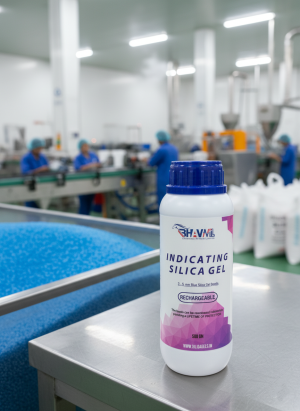
To signify the saturation level of the Silica gel in sachets, these sachets containing Silica gel in bead form are available in colours such as white, brown, and orange.
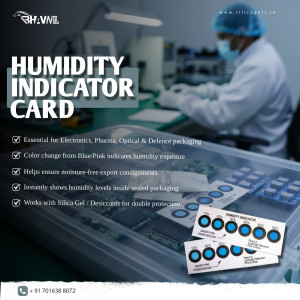
The use of markers like methyl orange and cobalt chloride is mostly used to distinguish between the anhydrous and hydrous states of Silica gel. The colour of the Silica gel beads in the sachets changes as the time for recovery approaches. Because of their ability to trap and desorb moisture, Silica gels have made their way into a variety of applications in everyday life. These sachets are also available in the food-grade form, as anti-caking agents, and also in medication bottles, as a 2 percent concentration of Silica Gel does not require FDA approval.
The amount of moisture in the air rises as the relative humidity and temperature in the environment rise. If the relative humidity varies, the substrate or substance containing moisture adjusts to the new relative humidity to achieve equilibrium, and the moisture level rises, causing chemical, biological, or mechanical decay. Chemical degradation occurs as chemicals interfere with elevated moisture levels, resulting in oxidation reactions that alter the product's consistency and cause adverse effects, such as in the case of packaged medicines and injections. Biological degradation occurs as a result of mould formation, which is optimal and expands quickly in response to increased moisture levels in the ambient atmosphere, manifesting itself within two days in the case of leather products and leather shoes.
Metals and cellulose insulation show mechanical degradation as moisture levels in the ambient atmosphere rise, causing changes in size and form. Chemical and biological degradation, on the other hand, can be avoided by using Moisture Absorber Silica Gel, which comes in sachets with markers. As a result, relative humidity in India is often said to be high, resulting in both moist and dry conditions throughout the region.
As a result, the best way to meet such a gap in humidity levels and protect consumers from moisture exposure is to use the Absorbent –Silica gel. They have a 40 percent absorption potential and they are enclosed in packages or bags made of a non-woven fabric called sachets that allow moisture to penetrate, allowing the gel beads to absorb moisture at a quicker rate. Per sachet has a DO NOT EAT alert and precise instructions embedded in it.
They are used during the packaging of electronic devices and they cause no exterior or internal harm to electronic components or objects. A small increase in relative humidity in a closed container for an extended period of time allows moisture levels to rise, which can be suppressed by the absorbent sachets inserted inside. These sachets come in a variety of packs, including Unit Packs which Pillow Paks, and have the unique ability to absorb both odour and moisture when combined with other absorbents including activated carbon and activated charcoal.
ChemBro Packaging & BhavNil Chemicals Private Limited is the fastest at providing moisture-absorbing materials and is skilled at delivering Absorbents to standards and dimensions that suit both small-scale and large-scale needs.